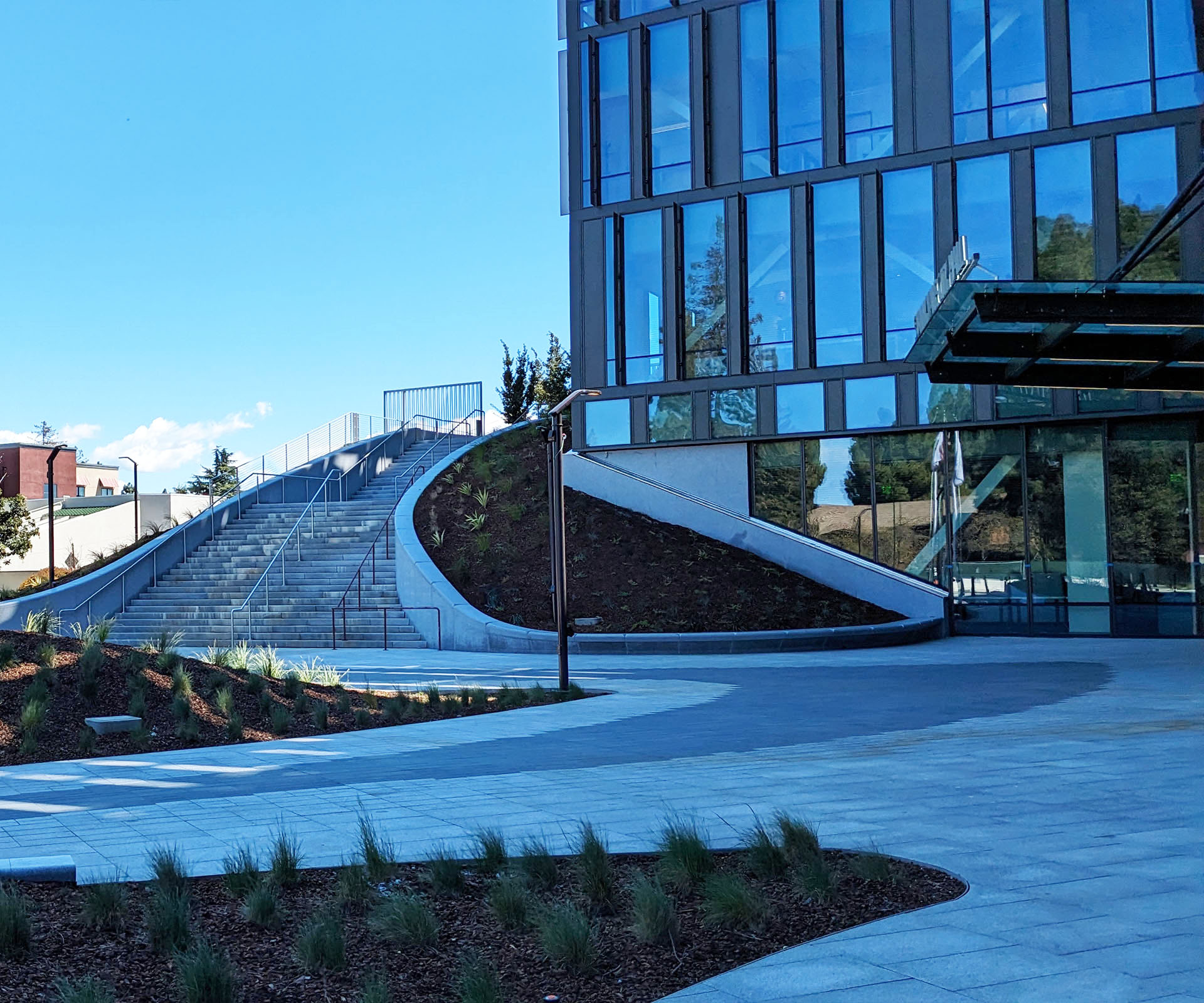
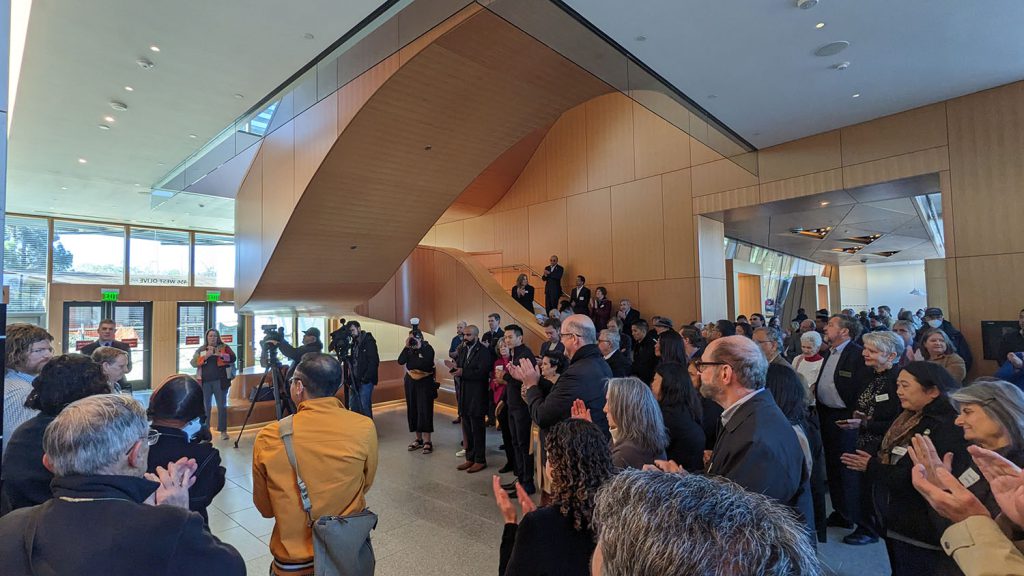
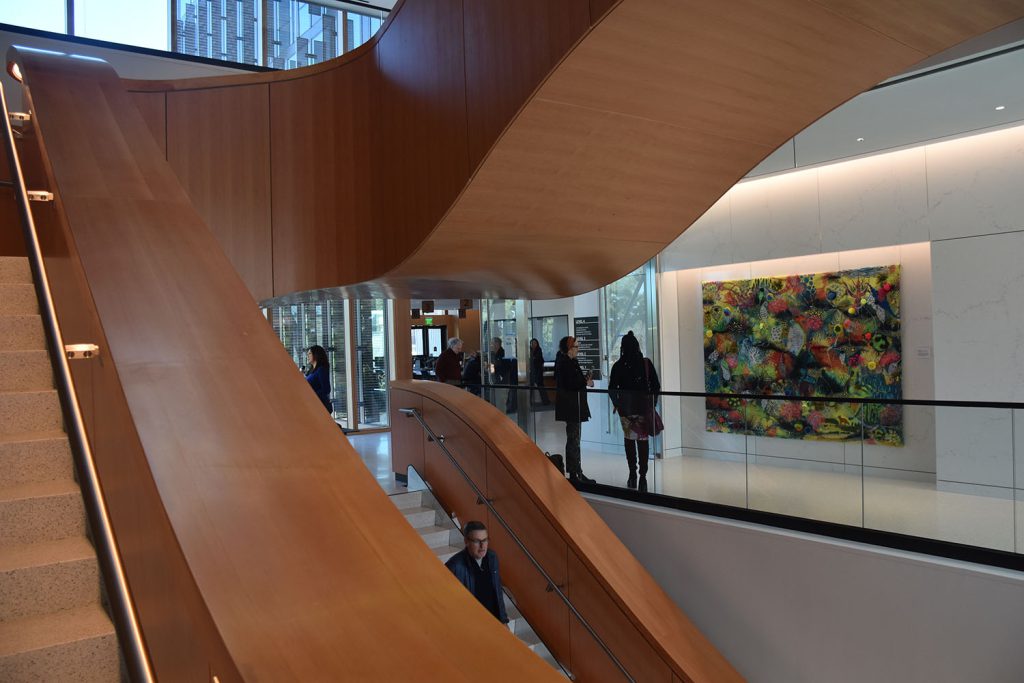
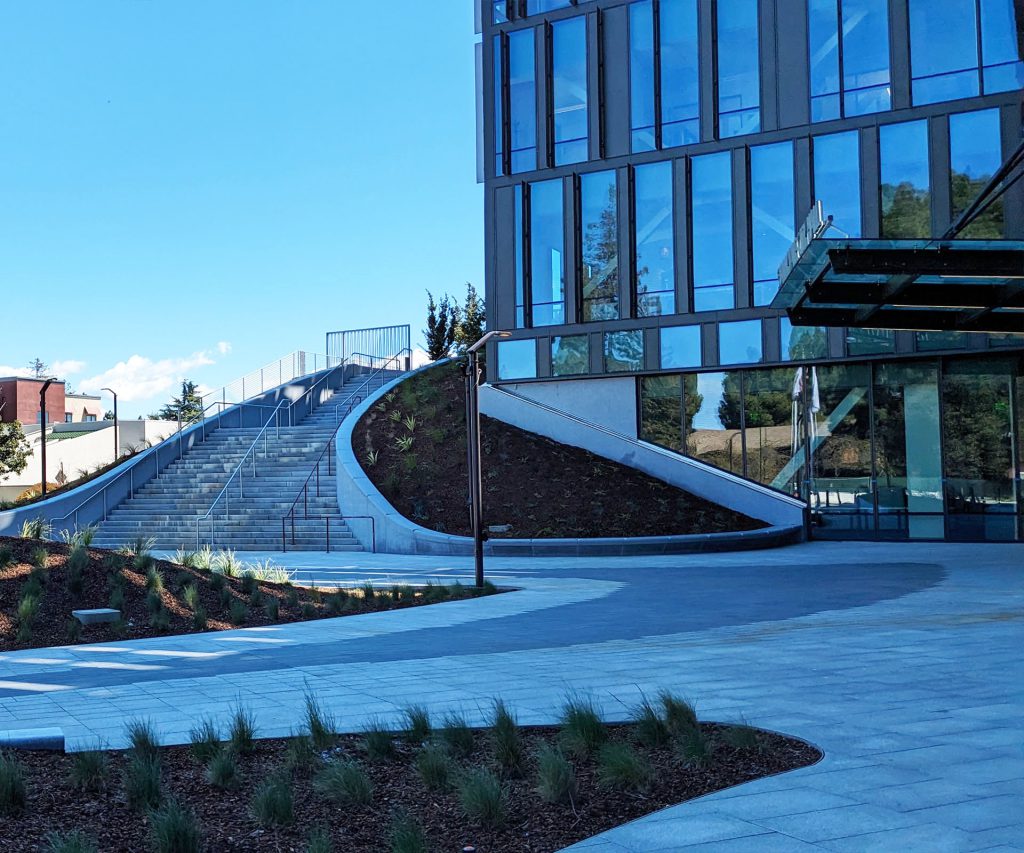
KPFF’s Dave Rossi and Nicholas Miley were excited to attend last week’s ribbon cutting event at Sunnyvale City Hall. Designed by SmithGroup, PAE, and KPFF to be the first net-zero and LEED Platinum city hall, the new building raises the bar for sustainability in civic projects and demonstrates the City of Sunnyvale’s commitment to positive change.
Biophilic design elements such as the timber curtain wall, sweeping tree lined terraces and a curving wood-clad central feature stair bring the project to life. A large PV array canopy above the roof provides on-site energy generation and shades the building below.
KPFF reduced structural embodied carbon by specifying high cement replacement mixes including 70% replacement in the mat slab and slab on metal deck. We also designed the seismic system for enhanced resiliency, reducing potential repair costs and materials that would be needed after a major event.
“It’s amazing to see all of the hard work by Hensel Phelps and the design team come together into a beautiful and innovative. I had the chance to talk to some city employees who have moved in and are enjoying their new space – it really made it all feel worth it,” says Nicholas Miley.
As we move towards updating our Embodied Carbon Action Plan (ECAP) for 2023, we’d like to highlight some of the moves we have made and work we have done to push the SE 2050 initiative forward.
2023 ICM Conference on Translating Climate Ambition into Climate Action
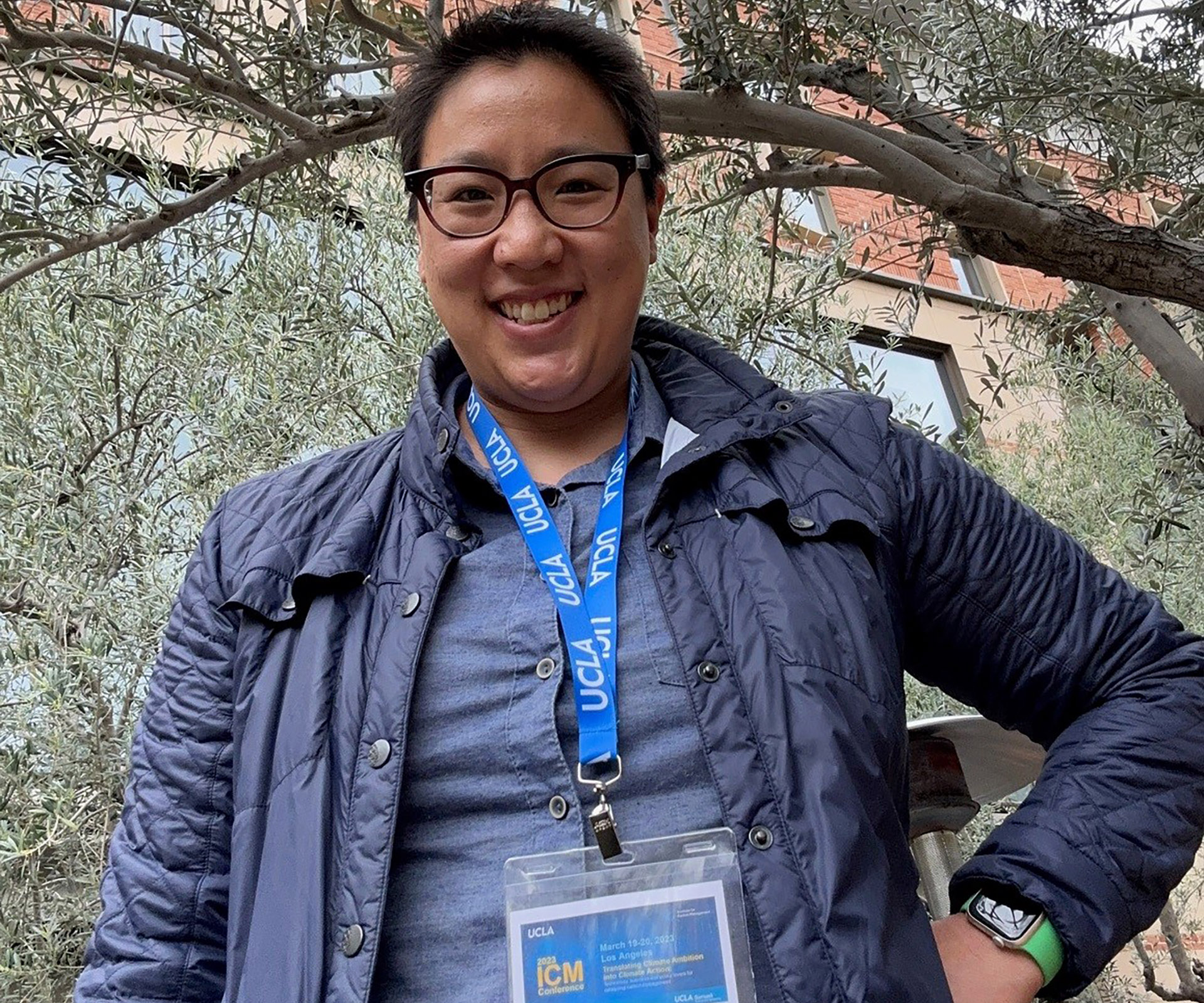
KPFF was honored to be invited to the 2023 Institute for Carbon Management (ICM) Conference on Translating Climate Ambition into Climate Action. Molly Seto, KPFF SF (pictured at left) and Kane Pithey, KPFF Los Angeles represented KPFF at the conference at UCLA. It was inspiring to hear about the great work that Professor Gaurav Sant and team are doing at ICM. We were able to connect with some of the relevant climate tech businesses that have spun out of ICM and discussed how we can collaborate. The conference also highlighted different voices regarding climate action, and it was very informative to hear how investors think and fund new climate technologies as well as discussing the challenges of scaling. We’re excited to see the progress and direction we’re taking as an industry and we at KPFF are doing our part to move the needle towards net zero embodied carbon in our designs.
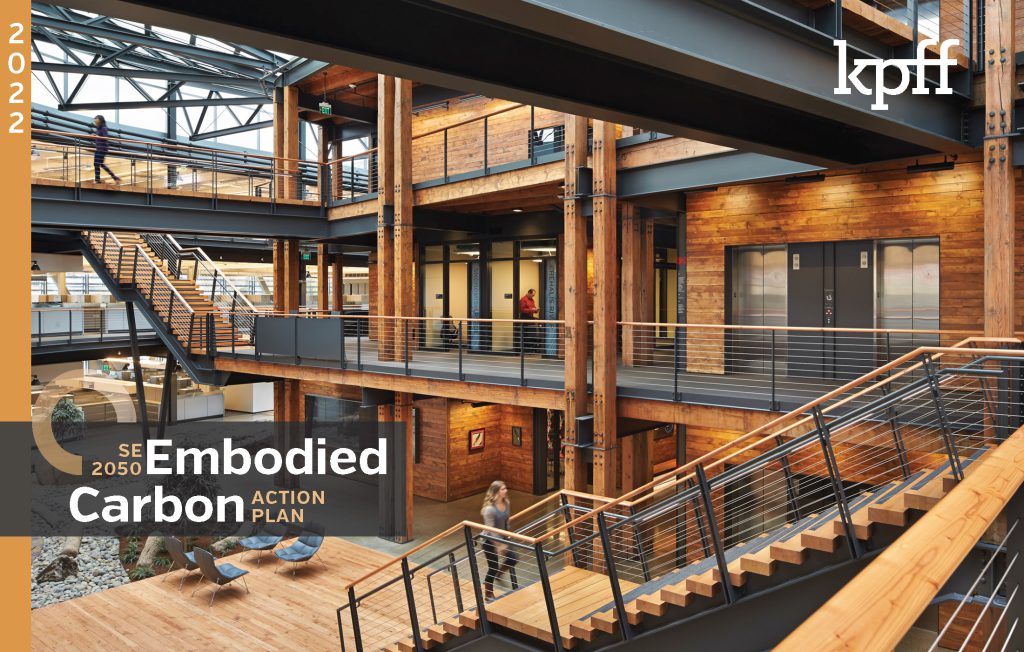
KPFF’s 2022 SE 2050 ECAP
Partnering with Clients to Educate and Find Environmentally Responsible Solutions
With all the environmental concerns we’re facing, it’s important for architects and engineers to work together to come up with sustainable building solutions that reduce carbon emissions and energy waste. By working together, we can combine our unique expertise to create sustainable, cost-effective, and efficient buildings while reducing the overall carbon footprint of the built environment.
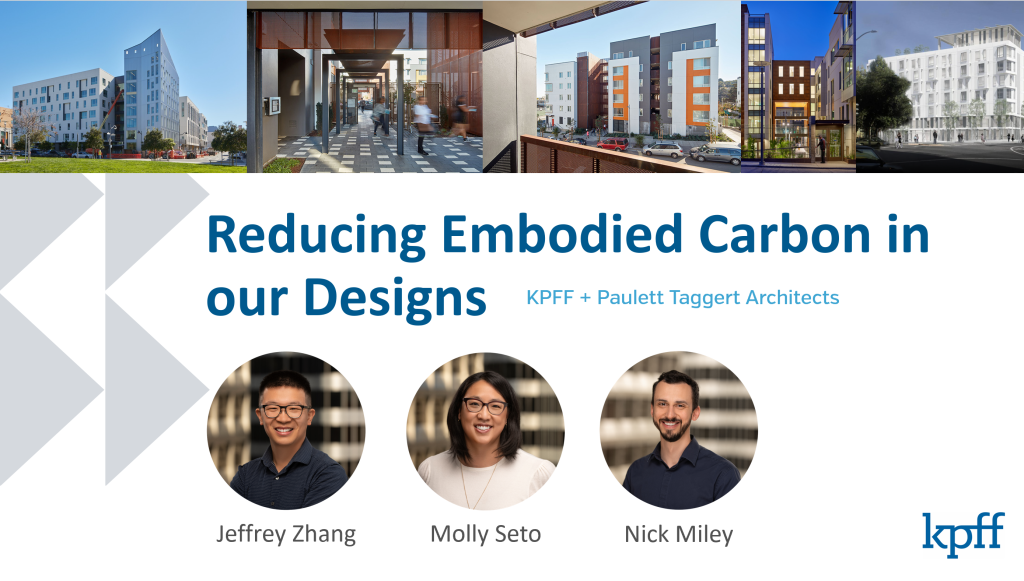
Paulett Taggart Architects (PTA) has been a close partner with KPFF on affordable housing projects in the San Francisco Bay Area. Affordable housing projects should not only serve our underserved communities but also be sustainable as climate change disproportionately affects these same communities. We presented at PTA’s office on how we could reduce the embodied carbon in our designs together. We discussed our SE2050 Commitment how to quantify embodied carbon using programs like Tally and excel and reduction strategies aimed specifically for affordable housing. We had a great time hanging out with our colleagues at PTA and so did they!
The team gave us an instructive, accessible, and encouraging introduction to embodied carbon analysis terms and methods. The presentation offered great insight into KPFF’s embodied carbon reduction efforts, and the discussion helped me see opportunities for coordination between our teams to further reduce the carbon footprint of our projects. –Lily Oyler, Designer