Helping our Communities Archives - KPFF

Built to Belong: The Story of Santa Ana’s First Land Trust Farm

I may be an engineer by day, but more importantly, I’m a lifelong resident of Santa Ana with a passion for community-driven projects. Let me take you on a journey that’s been years in the making, blending civic engagement, engineering, and a deep love for the city I call home.

It All Started Across the Street

This story begins in 2016. Hamilton was taking Broadway by storm, Superheroes were dominating the box office, Pokémon Go encouraged everyone to be outside, and me? I was wrapping up my college studies and transitioning into my career as an engineer. I had spent the last three years working and volunteering at Santa Ana Library, mentoring local students. Even though I was looking towards my own future, I knew I wasn’t ready to step away from serving my local community.

A conversation with my boss at the Library pointed me toward Thrive Santa Ana, a local nonprofit located across the street, which was spearheading an initiative to reclaim public land for community use through a Community Land Trust model.

Community Land Trusts, which emerged as a form of community development in the late 1960s in Georgia, were instrumental during the Civil Rights Movement. Local Black farmers sought to assist African American families in securing access to land. By working the land cooperatively, these families enhanced their economic security and supported their multi-family communities.

Santa Ana has long struggled with outside businesses coming in, profiting from the people of Santa Ana, and sending those dollars back to the surrounding Orange County cities. Rallies were held, asking for “community lands in community hands.

Thrive’s idea was ambitious: convert underutilized public land into a community farm and marketplace, operated by and for the residents of Santa Ana. When I heard their vision, I knew I had to be part of it. Their approach resonated with me, both as an engineer and as a resident invested in Santa Ana’s future.

Engineering Meets Grassroots

From the start, this project required a collaborative, multidisciplinary approach. I served as a connector between Thrive and key industry partners.

By this point, I had started working at KPFF. I reached out to my colleagues in our civil department, who were more than willing to help. They reviewed the schematic design and helped me put together a list of deliverables THRIVE would need from the civil engineer they planned to hire. Along the way, I learned about the importance of a Water Quality Report (WQR), something the City of Santa Ana’s Planning and Building Department would expect. Thanks to Ali Khamsi and his team’s experience working with the City, they knew exactly how to navigate the requirements and set the project up for success.

I also leaned on the support of our structural reporting center managers, who helped me understand that when shipping containers are repurposed for public use, they require foundations and some limitations on new openings in the containers. Bill Thorpe, who shares a strong commitment to civic engagement through his work with local school foundations, was a great advocate for the project. He understood that a community project like this couldn’t be approached with a typical “sticker price” mindset. With that in mind, I eventually pushed to formalize our involvement with a proposal.

Next, I connected Thrive with several architects I had built relationships with during my time at KPFF, and I even promoted the project on LinkedIn to help them find the right consultants. Thrive invited me to sit in on the interviews, since navigating the consultant selection process was new territory for them as well. In the end, they chose to collaborate with City Fabrick, a nonprofit organization based in Long Beach.

Throughout this process, Thrive recognized the value I brought to the project, not just as an engineer, but as a passionate advocate and a resource familiar with the city. They wanted to continue working with me, and asked City Fabrick to partner with KPFF as their structural consultant. From there, Thrive assembled an incredible team to bring the project to life:

  • City Fabrick for architecture
  • Ardurra as civil engineers
  • All American Construction Solutions as the contractor

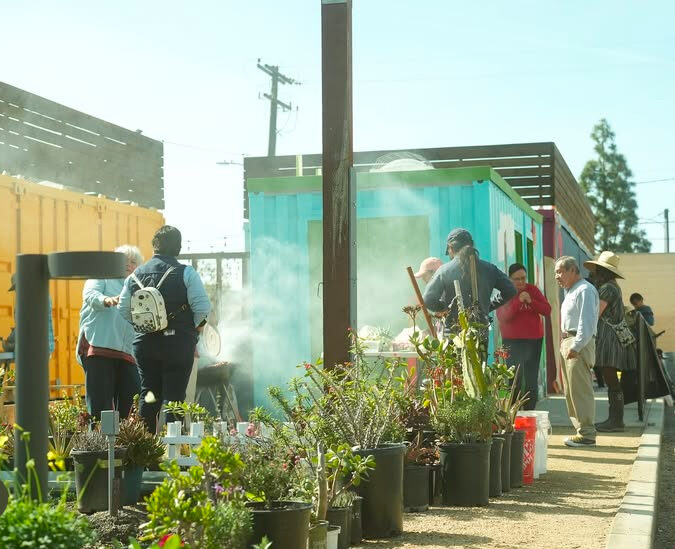
Our design centered around using shipping containers as the primary structures. This approach was eco-friendly, modular, and cost-effective. It also presented valuable learning opportunities such as designing foundation pad footings to distribute the loads between containers. We also structurally “stitched” together the containers so, in case of an earthquake, the containers would move in unison rather than colliding against each other. To complement the design, Bill Thorpe and I designed a cost-effective wooden walkway to connect the containers and other structures across the site.

While the City provided the land under a 99-year lease, the funding was secured through grassroots fundraising and grants.

Designed by the Community, for the Community

Thrive made it a priority to keep Santa Ana residents and future vendors at the center of the process. In fact, the idea for the farm came directly from the community itself. Early on, as part of the city’s Sunshine Ordinance, which requires residents near planned construction sites to be notified, we went door-to-door to share the land-use plans. During those conversations, residents shared a common desire: they wanted spaces where they could gather, learn, and cultivate healthy food.

It’s not uncommon in Santa Ana for households to contain entire extended families. The crowded environment creates a strong desire to build something of your own. Additionally, many of Santa Ana’s residents work in the hospitality industry across neighboring cities, often relying on full buses each morning to get to work. Having a community space close to home meant more than just convenience. It represented belonging. Even before construction officially began, Thrive hosted community events on the graded land to build awareness for the project, making sure the vision remained truly community-led from the start.

Pandemics, Lead, and Plan Checks (Oh My!)

No great project comes without hurdles. Between the COVID-19 pandemic, plan check rounds, and the discovery of lead contamination in the soil, delays in the project were inevitable. But through City Council meetings, community advocacy, and lots of late-night emails, we kept the project moving forward.

My involvement extended beyond engineering; I frequently attended City Council meetings, advocating for the project’s community-driven mission and sharing insights on soil unpredictability to reinforce the need for flexibility in timelines. It was my own passion for the project that guided me to fight for the space Santa Ana deserved.

The City closely monitored the project, as the lease agreement for the land required regular reporting and accountability. Branded as “Santa Ana’s First Community Land Trust Project,” Thrive understood the significance of setting a strong precedent. Their hope was that this success would encourage the city to continue investing in its residents by repurposing some of the ninety-plus vacant lots scattered throughout the city. The goal was to demonstrate that even at a micro-farm scale, these small plots of land could become vibrant community assets.

As the plan for the farm developed, it became clear that we needed to collaborate with the OC Health Department as the City intended to serve food from the containers. After clearing those final obstacles and receiving project approval, the real magic began to happen.

Construction Meets Community

Thrive made sure the inhabitants—local residents and vendors—were always part of the process. After we craned in the shipping containers and framed out entrances on them, we invited the community to help us with painting murals on the containers. We planted seeds together: both literally in the soil and metaphorically in the heart of the community.

My favorite moment though? Inviting students from Valley High School (as part of the ACE Mentorship Program) to the site. They toured the farm, learned about Community Land Trusts, and saw firsthand how engineering and architecture can shape communities. Fortuitously, the OC/LA ACE program is focusing on Community Land Trusts for their 2024-2025 All-Schools Student Presentations. Although still in development, I recently heard the students brainstorming ideas for food cultivation, which warms my heart.

The Grand Opening

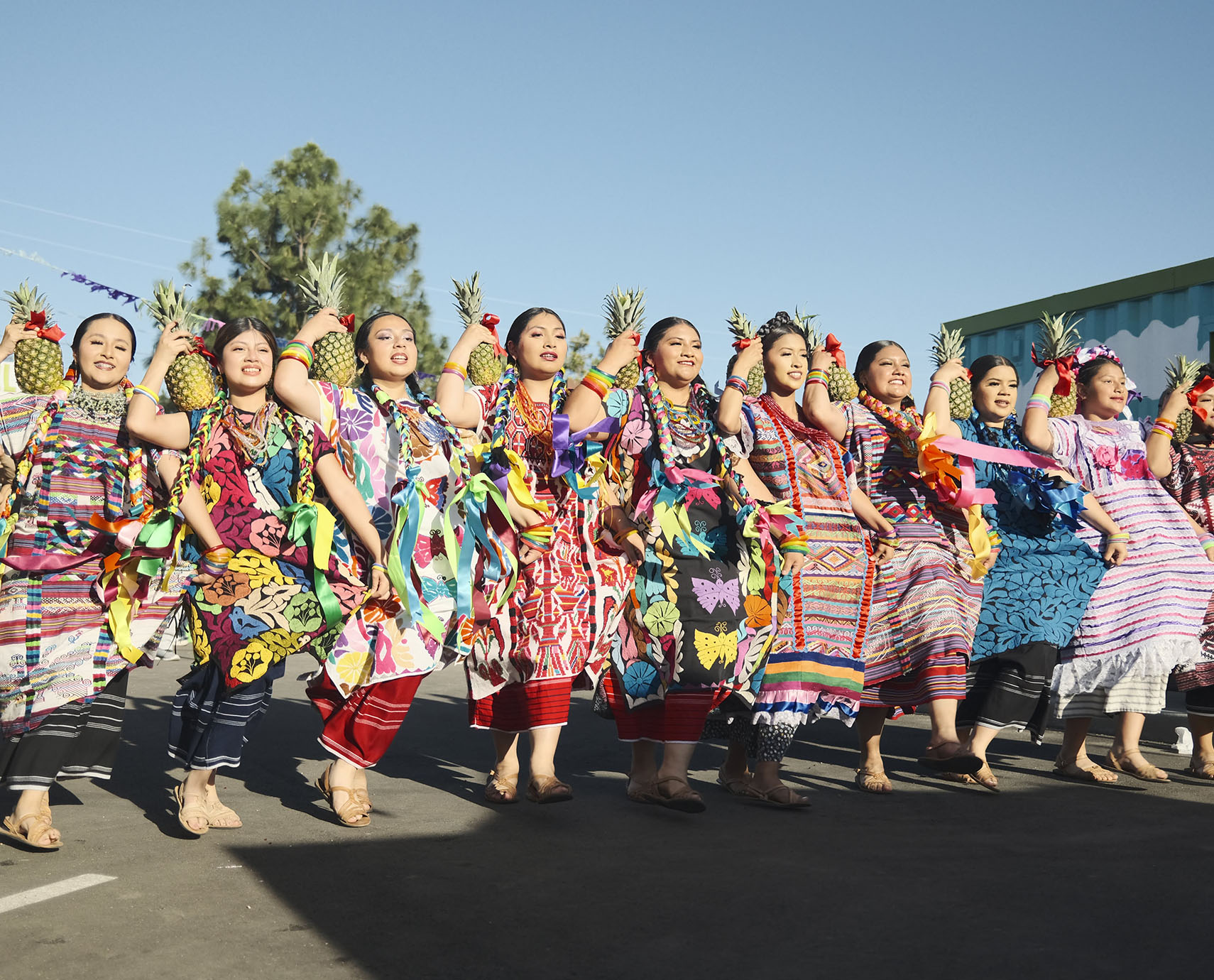
The grand opening was a celebration of culture. The ceremony featured indigenous dances honoring and celebrating that soil is a living organism. Local vendors sold artisan crafts. There was free food for visitors and coffee tastings to promote the coffee shop container. Lines wrapped around the entrance. I invited City Council members, who showed up and witnessed firsthand what I had known from the beginning: Santa Ana wants more spaces like this.

Leaving a Legacy

With the land secured under a 99-year lease, this hopefully means the farm will thrive long after I’m gone. Knowing I played a role in creating something that will benefit generations to come is profoundly meaningful. Seeing young gardeners already working the land means I’m leaving something in the world that will have generational benefits. It’s why I do what I do.

I’m excited to see how this farm sparks more opportunities for community spaces in Santa Ana and beyond. By demonstrating the success of this model, I hope it inspires additional projects that blend engineering with community engagement.

As Lin-Manuel Miranda says in Hamilton, a legacy is “planting seeds in a garden you’ll never get to see.” Well, I’m glad I got to see this one flourish.
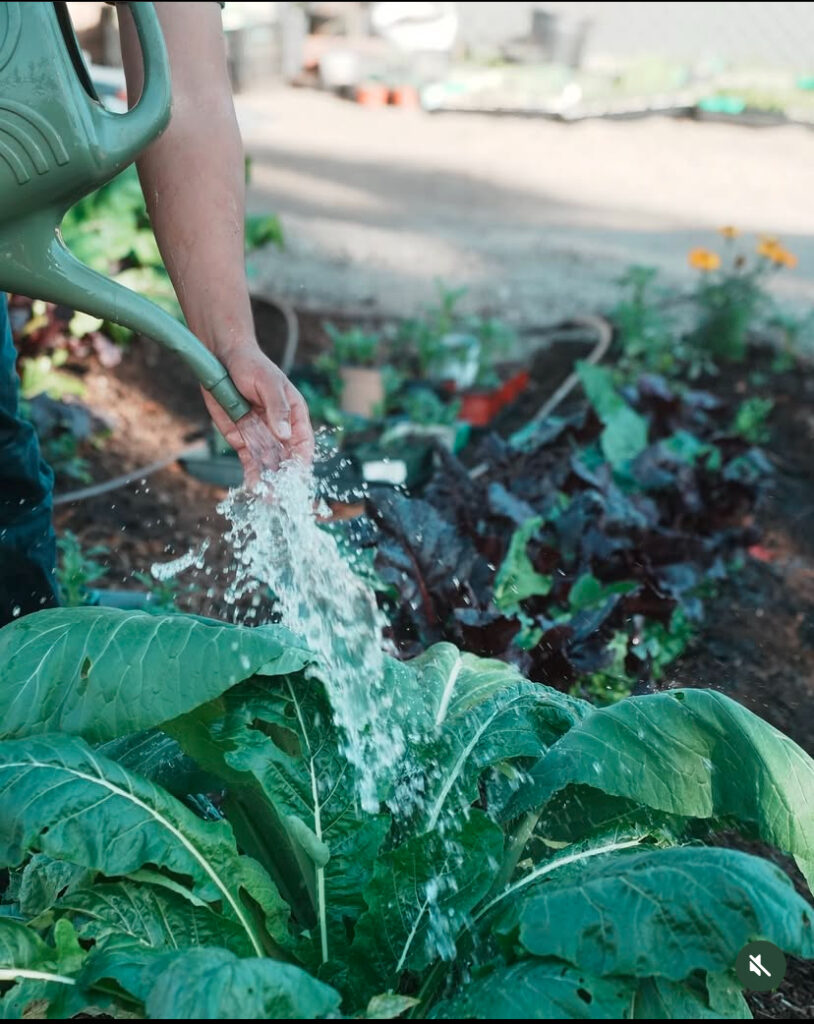
All photos by Felipe Ramirez, courtesy of Erik Sanchez and Thrive
Building for the Future with Life Cycle Assessments

Buildings are an essential part of our daily lives – we sleep in them, work in them, eat in them. But how do the buildings we live in impact the world around us? From unprocessed materials to initial construction to daily operations to eventual decommissioning, every phase of a building’s life produces environmental impacts. Life Cycle Assessment (LCA) is a modern tool for illuminating these impacts and making choices in design that will lead to a more sustainable and resilient structure.

What is a Life Cycle Assessment?

Life Cycle Assessment is a method for quantifying the environmental impacts of a product or process across its entire existence. Coca-Cola performed the first Life Cycle Assessment in the 1960s to evaluate the environmental impacts of its glass bottles, encompassing material extraction, transportation, product use, and disposal. Since then, Life Cycle Assessments have crossed sectors to influence buildings, not just bottles.

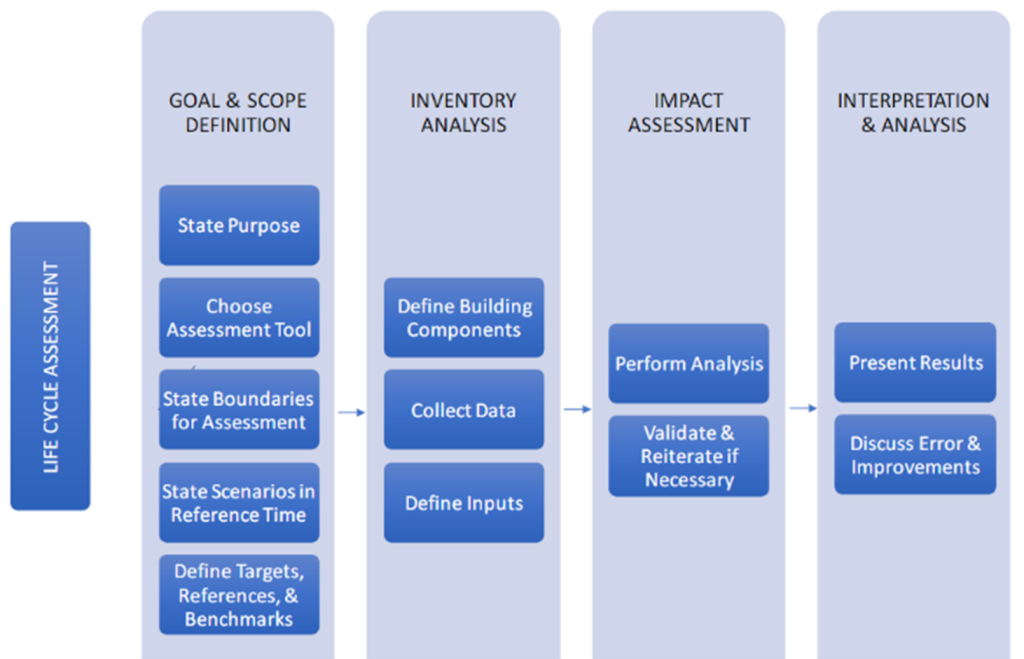
In the architecture, engineering, and construction industry, the LCA process involves four stages: (1) goal and scope definition, (2) inventory analysis, (3) impact assessment, and (4) interpretation and analysis.

Diagram showing process of Life Cycle Assessment

The most widely used metric in Life Cycle Assessments for buildings is global warming potential (i.e., the CO2 equivalent released into the atmosphere as a result of the building project). It is often abbreviated as GWP. Other metrics in LCAs include acidification, eutrophication, ozone depletion, and smog formation potentials. Products such as Tally, Athena, and One Click make performing an LCA more manageable by maintaining life cycle inventories of products and, in some cases, integrating with modeling programs (e.g., REVIT). The assessment evaluates raw material extraction, processing of raw materials into construction products, transportation to the site, building use, deconstruction, and material disposal or recycling/reuse.

Why Perform a Life Cycle Assessment?

A Life Cycle Assessment performed early in a building’s design can help:

Inform Structural System and Building Materials Selection. The environmental impact of studied systems and materials are quantitatively provided by LCA. This can, in turn, provide confidence to designers and owners as they optimize design and assess the merits of each system or material. Furthermore, prioritizing low environmental impacts is an emerging trend, leading to advancement and innovation within the AEC community.

Achieve Sustainability Certification. Performing a Life Cycle Assessment can earn points toward LEED certification, International Living Future Institute certification, or other green building initiatives. For building owners who value sustainability certification, particularly where global warming potential is a criterion, an LCA is essential.

Identify Opportunities for Improvement or Efficiencies. Explicit consideration of environmental impacts has led to innovative building systems and methods. The rise in construction of mass timber buildings has grown synergistically with the rise in acknowledgement of the global warming potential contributed by building construction. Similarly, the development of low-carbon concrete technologies has rapidly expanded in response to concerns expressed by design teams over the contribution to global warming potential from Ordinary Portland Cement. An LCA provides the critical opportunity to better understand a project’s sustainability impact and thereby explicitly target the use of innovative solutions.

Utah Case Study

For a recent multifamily development in Utah, the owner wanted to compare costs and benefits between an all-steel structural system and a steel-timber hybrid system.

KPFF performed a high-level Life Cycle Assessment, focusing on embodied carbon (or global warming potential) and embodied energy (or energy depletion potential). The study found that the global warming potential and energy depletion potentials were approximately 70% and 50% lower, respectively, in the hybrid structural system when compared with the all-steel system. The decreased environmental impacts were due to the significant amount of carbon sequestered within lumber products (known as biogenic carbon) and the low energy associated with producing mass timber products.

Additionally, KPFF explicitly considered the architectural floor assembly within an improved LCA study. The floor assemblies in the study were unique because the project was targeting high sound transmission class ratings. Including the floor assembly, which varied between structural systems, allowed a more wholistic analysis to be conducted. When including both architectural floor assembly and structural system, the study found that the global warming potential and energy depletion potential were approximately 10% and 30% lower for the hybrid system when compared with the all-steel system. These results, when compared to the structural system only results, reflect the importance of a wholistic approach to LCA. These rapid LCAs took less than a week to return to the owner and provided them with critical, quantitative information on the environmental impacts to consider along with cost and other factors.

Regardless of project type or size, a Life Cycle Assessment is a valuable tool for evaluating the impact of buildings throughout their lifespan. By informing design decisions, Life Cycle Assessments can help owners and design teams select appropriate building materials, achieve project sustainability goals, and identify opportunities for innovation. As the construction industry continues to prioritize sustainability, Life Cycle Assessments will become increasingly important for designing and constructing buildings that not only give us spaces to live, work, and play, but preserve our planet for decades to come.

To learn more about KPFF’s commitment to sustainability and environmental stewardship, click here.

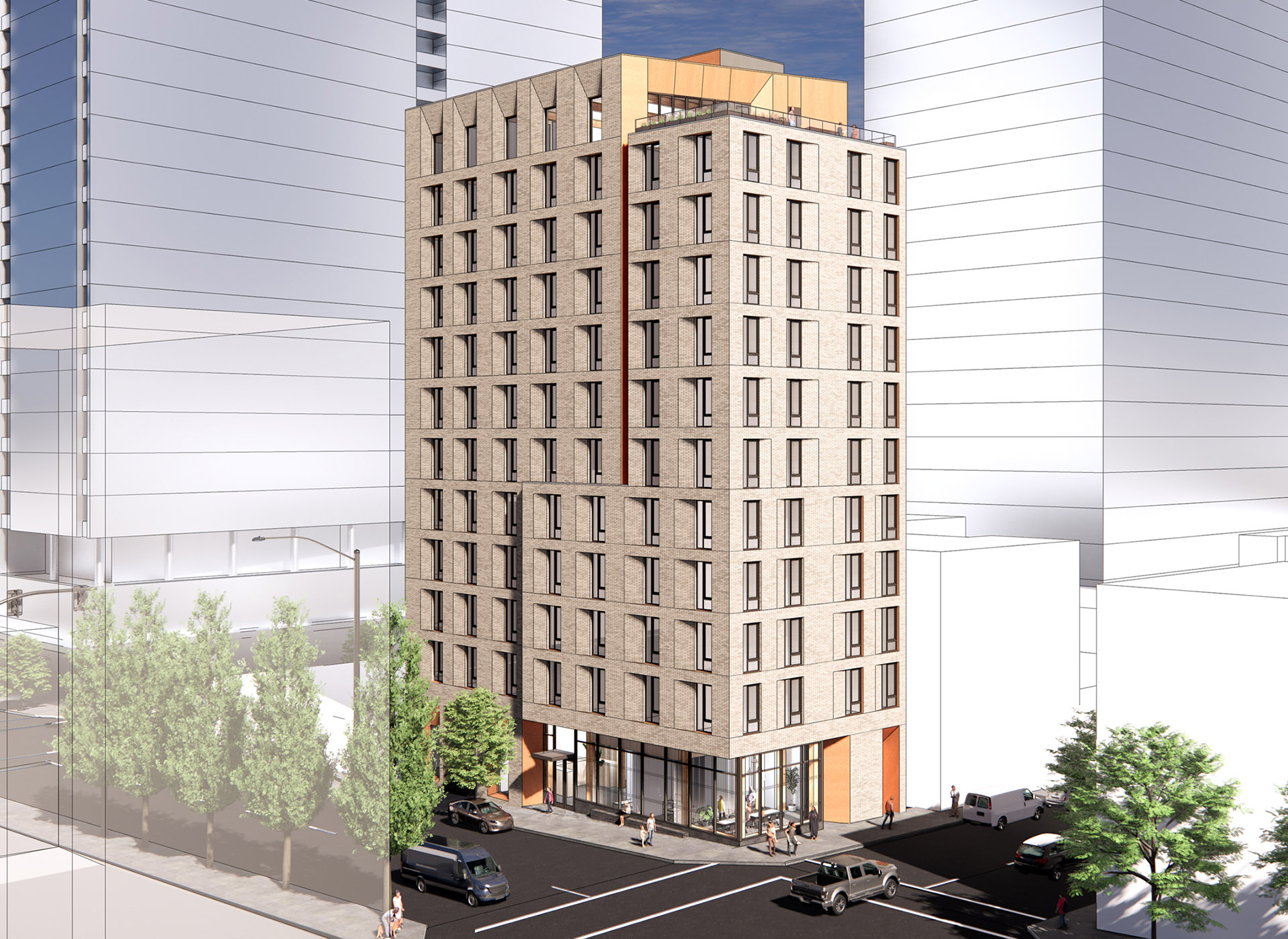
[Cover Image: Julia West Apartments; rendering courtesy of Holst Architecture]

Confessions from a Runner Up, Leadership SHEdership

On Thursday, April 6th, I attended a full-day RISE Leadership Summit with GiANT hosted by the Eugene Chamber of Commerce. I am happy to report I did leave the day with some new tools and new inspiring contacts. The cherry on top was being honored at the afternoon reception as one of 4 Leaders of the Year finalists.

Spoiler alert and hearty congratulations to Jessica Price with the University of Oregon, this year’s winner of the Women Business Leaders, Leader of the Year award. She is truly awesome, and I could not imagine a more deserving winner.

As I sat with my wife and fellow nominees from different Eugene companies, I was humbled and grateful to be recognized among them. With 15 years as a civil engineer and project manager, my career is evolving to that of a group leader, manager, and mentor (while also engineering and managing projects). I’m constantly learning, but I know that leadership takes knowing yourself, listening more than talking, applying your unique strengths, and constantly recalibrating to your team’s needs and dynamics.

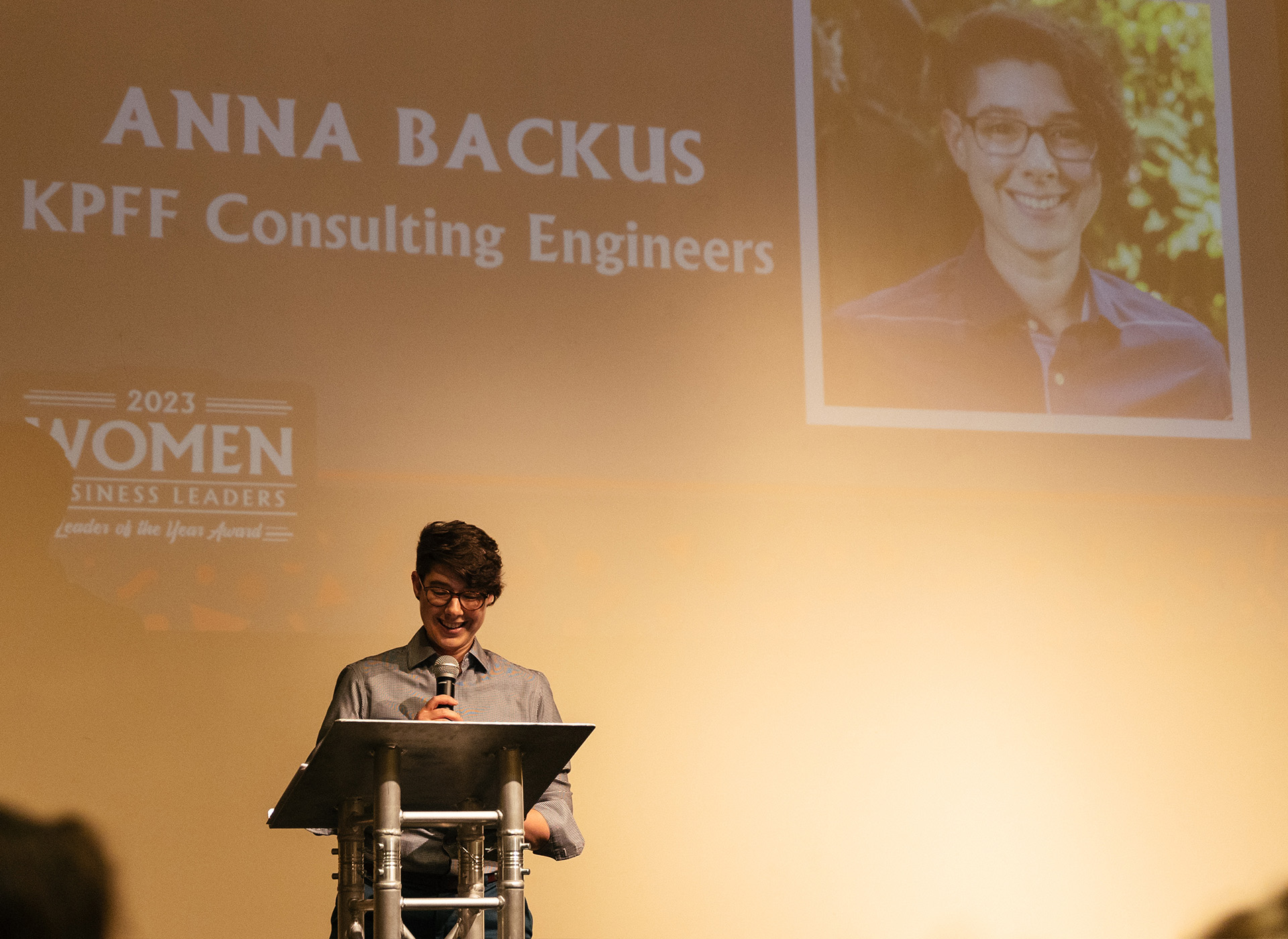
The Downtown Athletic Club ballroom was filled. My whole office was in attendance. My panic about public speaking was turned up to 11. After some introductions, a video played featuring Matt Keenan, a man who proved his wisdom by hiring me when I was a totally green engineer, and has been my manager, mentor, colleague, and friend over the years. He said I made him a better person and all kinds of other nice things that I hope to live up to.

Then I had the mic to address the crowd with my prepared speech. And here it is:

Hi, I’m Anna Backus, and I’m a civil engineer, project manager, and group leader at KPFF Consulting Engineers. I’d first like to express my gratitude. Thanks to the Eugene Chamber for putting this event together, and to Matt Keenan for nominating me. I really appreciate your thoughtfulness in doing so. I am very grateful to be up here and in the company of these amazing women.Like I mentioned, I’m a civil engineer, and when I’m describing my job I’ll often say that if I’m doing it right, you don’t notice. If I do my job right, the built world just works. The tap works when you turn it on, you can safely and easily navigate the streets, you can use pedestrian areas and access buildings whether or not you’re able bodied, and, of course, you never encounter a puddle.So while I hope you have not noticed my hand in design, I think you will be familiar with our projects. Matt opened the office in 2004 to work on Riverbend Hospital, and since then, we’ve done a number of schools including North, Edison, and Jefferson, parks, including the recently completed Riverfront Park, various University projects including Knight Campus and the new dorms, and housing of all kinds, but closest to my heart, affordable housing including most recently The Nel on 11th and Charnelton. I’m proud of the work we do in Eugene, and I feel very lucky that answering a Craigslist job posting in 2008 led me to a company that believes you find success by following your passion, puts an emphasis on sustainability, and always looks for the best solution instead of just the usual one. I have had all the supportive leadership and resources to grow that someone could hope for, but sometime deep into the couple years of forced introspection that Covid brought, I realized that I had never worked for a woman in my career as an engineer. I want to be clear that there are women in all levels of leadership at KPFF, but we are a rare enough breed that through happenstance or bad luck, I had never had the opportunity to work for them. I resolved in that moment that I would be the last generation that could say that. I made it my goal to make sure that we not only did the easy part and hired women and BiPOC folks, but also created a culture where they are comfortable and can thrive. My desire to see underrepresented communities succeed at KPFF made me push to be the group leader in Eugene when the job became available.Now, as you know, I’m an engineer, but I’m also a Midwesterner, so open communication does not come naturally to me. So thank God I landed in Eugene. I’ve learned so much from design and construction community here. For the past 15 years, I’ve been able to observe and then participate in discussions with many different viewpoints… always with the goal to make Eugene better. What I’ve seen in those discussions is that being open and straightforward results in the best outcomes. Hearing and respecting everyone’s opinions is the best way to move toward a solution. And, it is clear both that Eugene fosters this type of communication and that it’s far from a universal approach outside of this community.I was able to take these lessons and use them as a manager. I try to make sure that communication is open and honest, and I approach problems with the assumption that everyone has good intentions and the same goal. In my work life, I honestly did not think I could like anything more than spreadsheets, but leading my team has been the most enjoyable and rewarding thing I’ve done in my career.To my team: you guys are awesome. We have an office that is collaborative, diverse, and productive. You bolster each other up with your strengths, and don’t hesitate to ask for help when you need it. And our culture is all you: you bring the open communication, the inventive spirit, and the fun. It is such an honor to work with you, and I can’t wait to see the leaders that you’ll become.

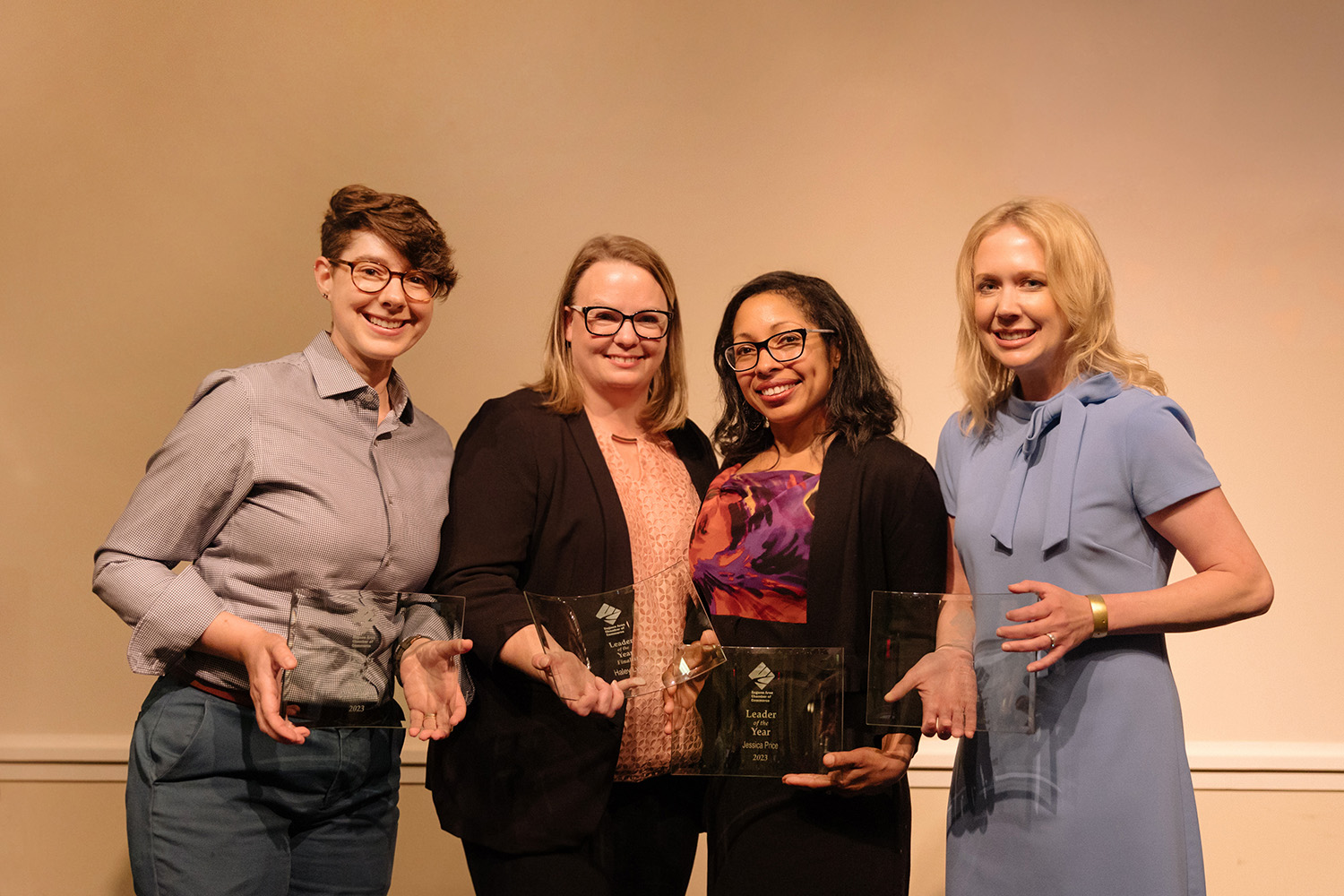
Left to Right: Anna Backus, KPFF, Haley Lyons, Kernutt Stoke, Jessica Price, University of Oregon, Jenny Bennett, Summit Bank (Photo Credit: Delene & Co.)

San Francisco Native and KPFF Structural Engineer Tackles Housing Equity

Born and raised in San Francisco, Michaela Nava was fascinated by buildings from a young age. She was curious how they are designed, how they are built, and especially how they stand up after earthquakes! When she started thinking about college it didn’t take long for her to zero in on structural engineering as her major. During her time at Santa Clara University, she started to notice the dramatic changes in the urban landscape around her. Mainly, the lack of affordable housing. Michaela shares how she and her colleagues are participating in furthering equitable housing in the SF Bay Area.

“My first job out of college was for a small engineering firm whose client base was mostly single-family homes in the South Bay. I worked there for a couple years, but always wanted to do more for the community back in my home town of San Francisco. I found myself at KPFF in 2016, drawn there for the collaborative culture and so I could work on affordable housing projects. I quickly learned and innovated ways to design a structure economically while achieving beautiful homes for people to live.”

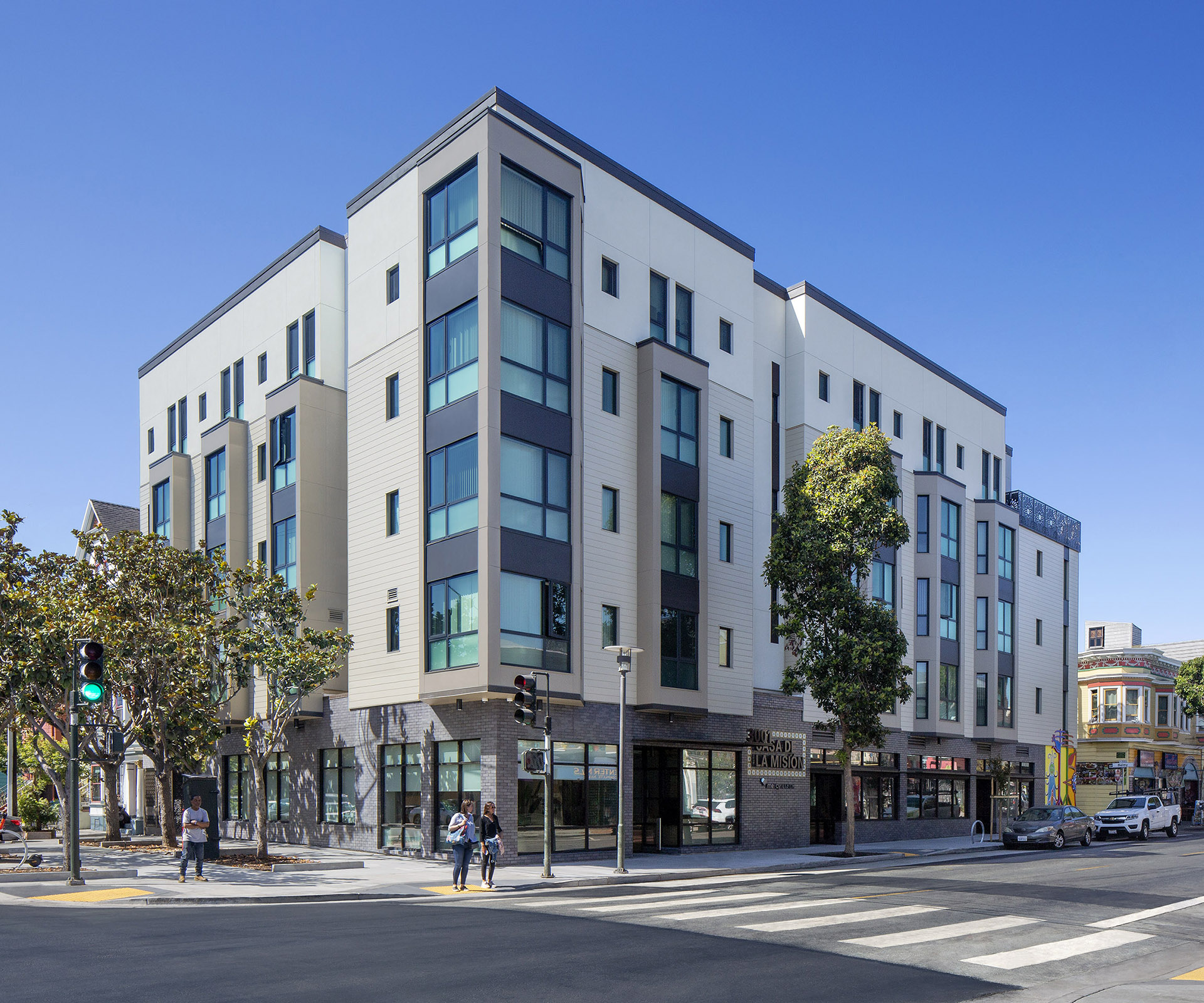
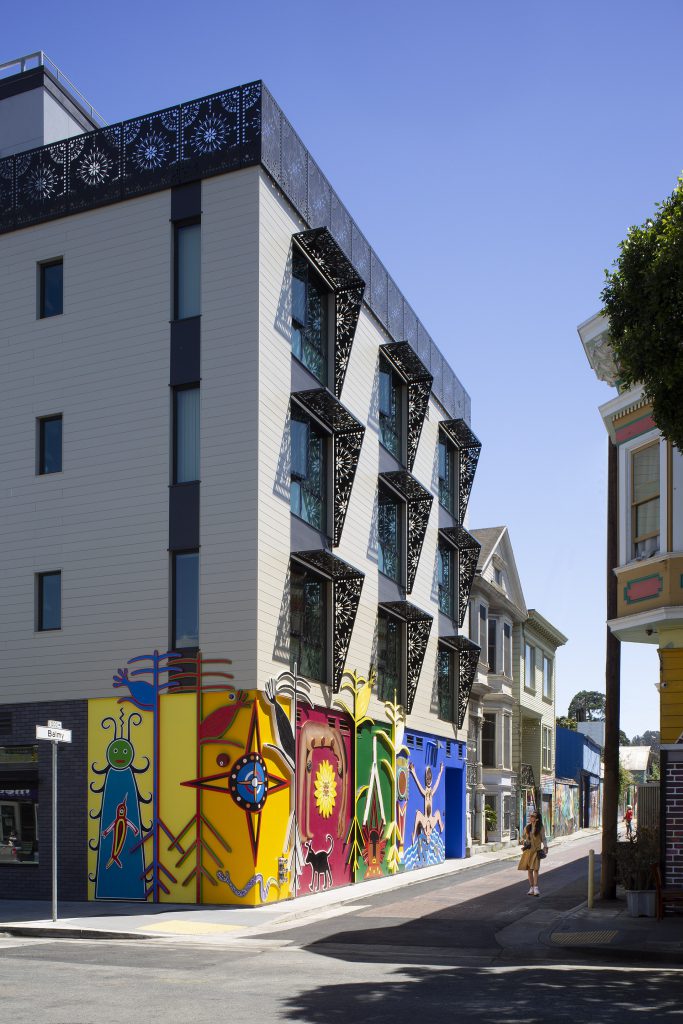
Casa de la Mision provides housing for seniors transitioning out of homelessness. Created in collaboration with HKIT, Y.A. Studio, James E. Roberts-Obayashi Corp, Mercy Housing, Mission Neighborhood Centers and PGAdesign.
Photos ©David Wakely

Michaela collaborates with many different local and national architects on these housing projects, each one inspiring her to design for efficiency, resiliency and sustainability. Specific strategies include:

  • Efficient structural layouts to minimize material costs without loss of structural integrity
  • Close collaboration with architects to optimize column and framing layouts to achieve the architectural vision (i.e., maximum unit sizes, comfort, safety)
  • Close collaboration with other disciplines such as MEP to reduce conflicts during the course of construction
  • Development of prefabricated and modular framing systems to shorten construction schedules
  • Implementation of high replacement concrete mixes of up to 70%, reducing carbon emissions
  • Early integration of the general contractor to implement feedback based on pricing and constructability, reducing overall cost of the project and reducing RFIs during construction

“We have a long way to go to solve the housing crisis in San Francisco. I am committed to playing an active role in this process, for the benefit of the community, the city I love and to further our profession.”

455 Fell Street in collaboration with Leddy Maytum Stacey, Paulett Taggart Architects, San Francisco Housing Development Corporation and Mercy Housing California