Projects & Services Archives - Page 2 of 2 - KPFF

Renovation and Retrofit of 100 Stockton Street: Transforming an Introvert into an Extrovert

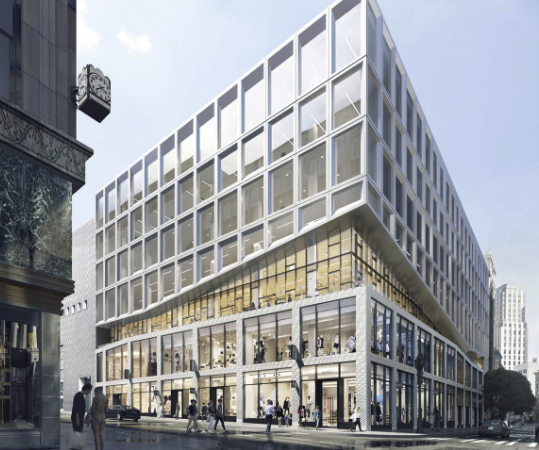
Standing seven stories tall, with a Brutalist aesthetic and an aging facade, 100 Stockton in San Francisco (or Macy’s Mens) was originally designed for a single retail tenant in the early 1970s in a time when solid walls were acceptable and natural light was sometimes an afterthought. Rather than tear down this historic structure the developers tasked the design team with transforming this introverted, dated building into an extroverted, light-filled jewelbox.

The overall project vision is to reshape 100 Stockton into a mix of retail and office space as well as add a rooftop restaurant and a wrapped outdoor terrace at the third floor. The engineering systems play a large role in this vision, so Lead Architect, Gensler collaborated with KPFF to explore options for both the site and building civil engineering and the complex structural systems required to give this Union Square icon a new life. 

The work not only changed the building’s appearance and functionality but elevated the skills and confidence of several budding engineers. 

Our structural team rapidly assessed over forty possible schemes, including interior cores and exoskeletons of various configurations. Creating this rapid response team during conceptual design encouraged creative solutions and ensured that the path taken throughout design was one that delivered a renovation and retrofit consistent with the developer’s expectations.

Associate and Structural Engineer Nick Miley shared “working on 100 Stockton was a whirlwind at first. Our team had to respond to new tenant layouts and client feedback while evaluating a complex tangle of structural constraints. I was one of four engineers tackling the analysis challenge. We learned to work collaboratively and build on each other’s ideas – no idea was too crazy to be considered. This process taught me how to think about design options with the client’s objectives in mind and the importance of letting go of my preferred option in favor of new ideas that benefit everyone. Working on this project from design through construction has been a challenging but extremely rewarding experience that has shaped the trajectory of my career.”

KPFF Civil Engineers modernized the stormwater management and added a new rainwater reuse system, to help achieve LEED platinum certification. Replacing the sidewalks renews the relationship of bustling pedestrian traffic and store entrances while complying with ADA standards. In addition, they negotiated systems design with new infrastructure for the Muni underground light rail extension adjacent to the basement level.

“Being located close to our client and design team members allowed us to interact quickly and easily. Whether it was reacting to unforeseen conditions or coordinating with a massive and on-going public infrastructure project, we were able to develop solutions in a timely manner to keep the design and construction process moving. The time spent together early has built a level of trust and understanding that has grown throughout the project.” Ryan Beaton, PE,  Associate, Civil Engineer

During Construction (sky due to 2019 fires)

To increase seismic resiliency, add and enlarge windows, and create more open floorplates – multiple, complimentary structural solutions were designed. These solutions included:

  • an entirely new lateral system in the core of the building, including new walls with large openings at the lower levels for tenant flexibility and transitioning to buckling restrained braces (BRB’s) to allow for clear views on the office floors
  • installation of perimeter beams and columns to remove thick perimeter concrete bearing walls and to create a seismic separation from the adjacent buildings
  • carbon fiber wrapped gravity columns to provide ductility and mitigate earthquake damage
  • removal of two levels and adding supportive steel framing, with replacement of the concrete-framed ground floor with stepped steel framing to accommodate multiple retail tenants
  • replacement of the roof framing with steel framing to support the new restaurant space and landscaping
  • curtain wall clad with terra cotta tiles to match the surrounding buildings
  • removal of several existing columns and modification of the existing post tensioned girders, which required shoring the entire building at every level
  • a horizontal steel truss cantilevering off the newly poured columns

A project this complicated has a list of unknown conditions and lessons learned too numerous to mention. One of the keys to the team’s success was to avoid the standard “problem finding”mentality in favor of a solutions-based, collaborative mindset. 

Read more about this project in the March 2022 issue of Structure Magazine.
Pedestrian Bridge Installation at California
State University, Los Angeles

Pedestrian Bridge Installation at California State University, Los Angeles

The California State University Los Angeles Student Housing East (CSULA SHE) will be a new student housing facility, expanding housing facilities to accommodate approximately 1,500 additional students on campus. This transformative complex will offer traditional double and triple residence units for freshman and sophomore housing. The roughly 1,500 bed residence will include many amenities and gathering spaces such as: a fitness center, lounges, wellness room, laundry facilities, advanced vending machines, a kitchen, collaborative and independent study rooms, administrative spaces, and community and multi-purpose rooms. The project will also feature a new dining facility of approximately 20,000 square feet that will incorporate both a new and existing student housing dining program.

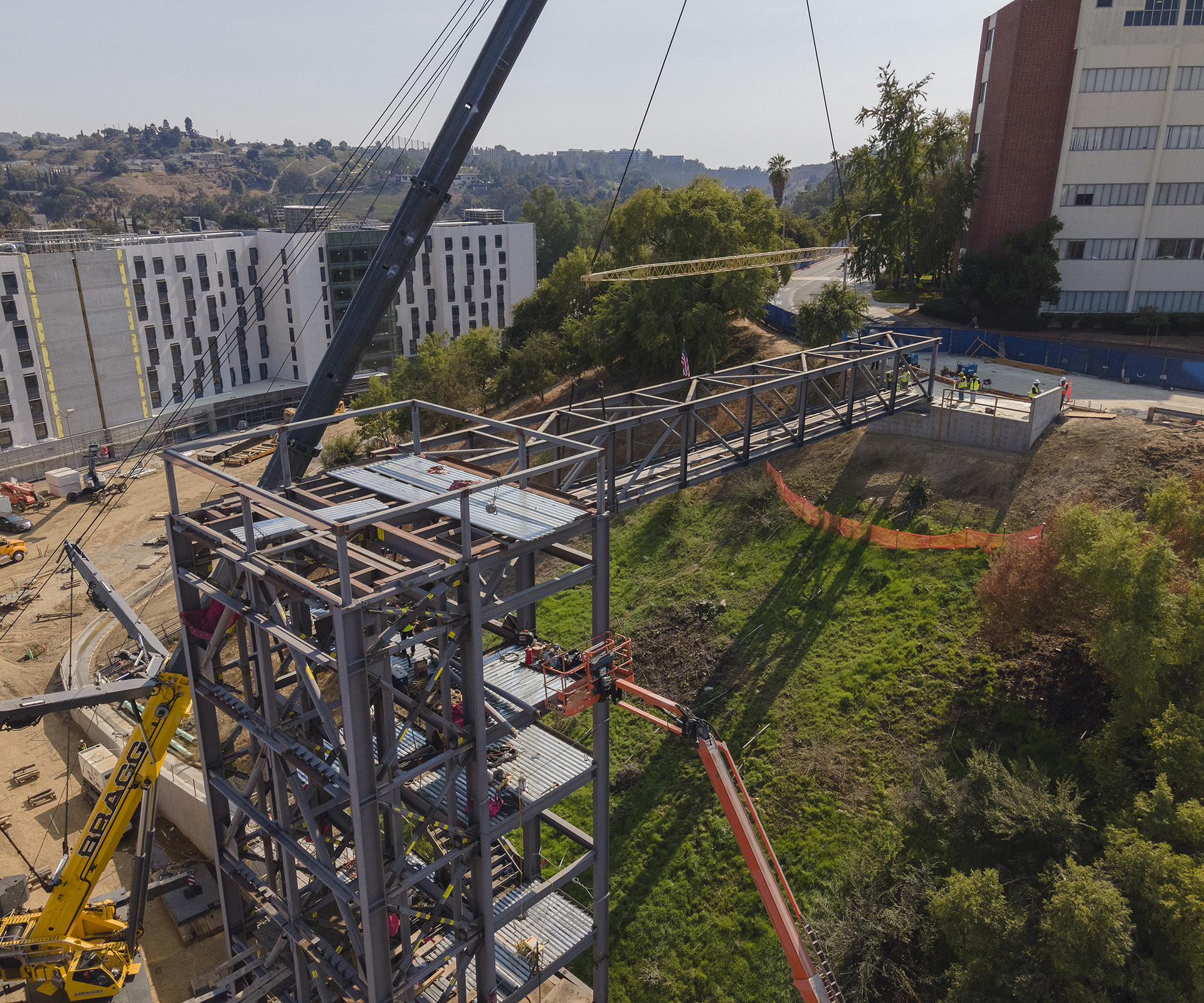
Additionally, this construction effort will include some enhancements on the site that will improve circulation between these dorms and the campus core. The most exciting element is a new 112 foot long pedestrian bridge and 80 foot tall stair/elevator tower to provide quick and easy access for students traveling to and from the housing complex, especially those with disabilities, as the site of the new center is significantly lower in elevation than the main campus.

While we look forward to the opening of this impactful project, the CSULA SHE building is still under construction. As of writing, the enclosure is fully complete except for some windows strategically left open for ease of construction. The elevator cores are nearing completion, and all floors have their basic structures built out. The interiors are being painted as quickly as the framers are finishing interior partitions. Other finishes, such as carpets, tiles and doors, are also being installed signaling the final stages before completion.

Caltech Bechtel Residence and Integrated Project Delivery

Caltech Bechtel Residence and Integrated Project Delivery

True Integrated Project Delivery (IPD) construction projects are rare and require an exceptional team to deliver the rigorous demands of a collaborative team that utilizes lean methodology to maximize operational efficiencies while working under a multi-party risk/reward contract. It takes an extraordinary building to inspire such a team, led by efforts from the Caltech ownership team, to create a new typology of on-campus living.

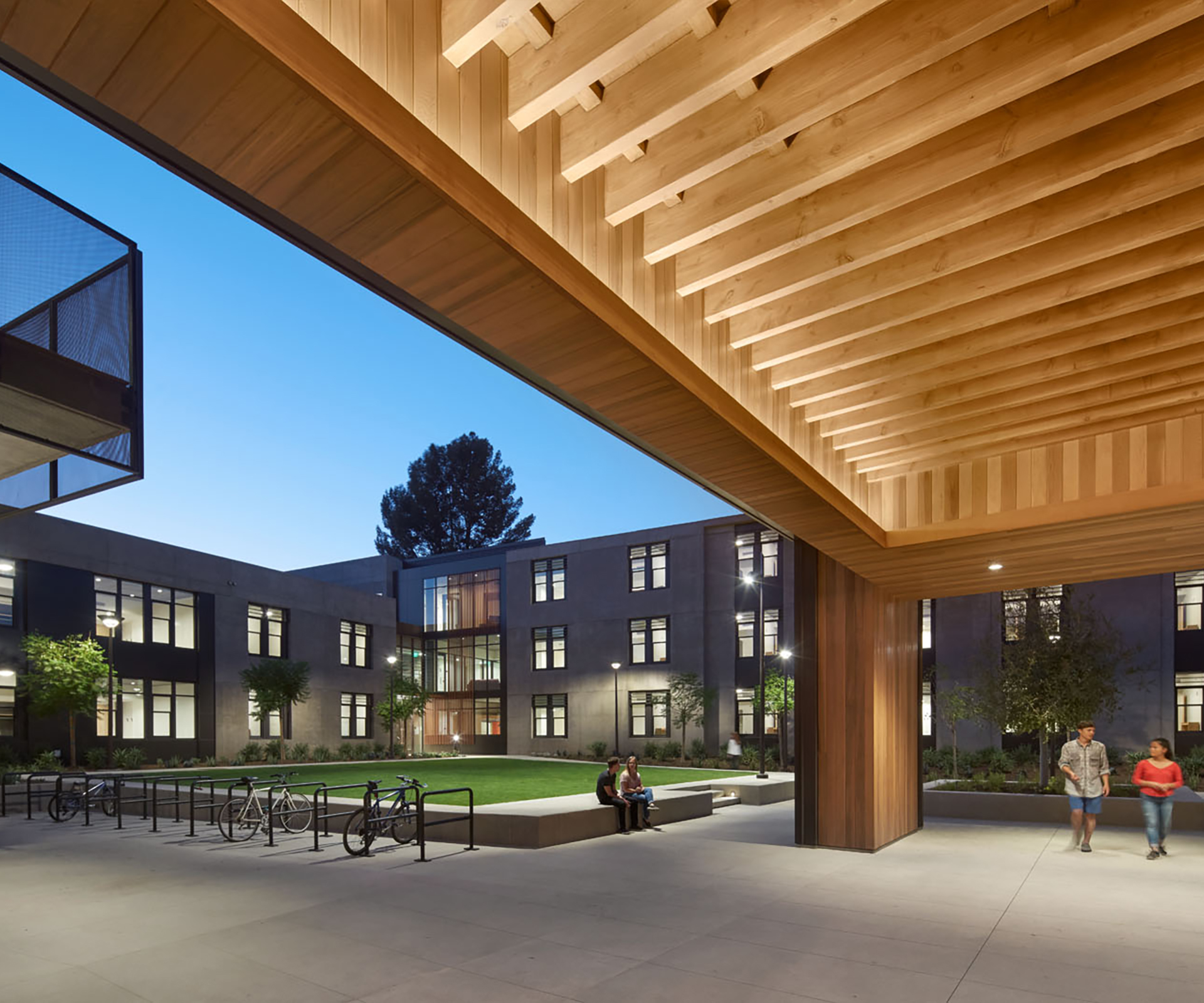
The 211-bed Bechtel Residence, named after life trustee Stephen D. Bechtel Jr., kicked off in 2016 and was officially opened September 17, 2019, as the first new undergraduate housing facility to open on campus in over 20 years. Caltech approached the program with the goal to provide housing for all of their undergraduate students on campus for the duration of their studies. This multi-use residence houses undergraduates from all class levels along with two faculty in residence, a half-dozen graduate resident associates, and a residential life coordinator. This new construction frees up off campus space for graduate student housing, enhancing student life both on and off campus.

Photo by Bruce Damonte

The IPD delivery included a Tri-Party agreement between Caltech and our construction and design partners MATT Construction and ZGF Architects. KPFF was part of the Risk/Reward Team under the architect’s prime IPD agreement and participated in the Incentive Compensation Layer (ICL) of the contract.  The design and construction team depended on trust and financial transparency of each team member as individual profit for each team member depended on the overall performance by the team to meet the Final Target Cost at the construction completion of the project. This agreement kept the team focus on clear communication and collective problem solving in a supportive environment to achieve the required milestones. The design of the new residence encourages and enhances the collaboration and communal housing culture already on campus, while simultaneously offering residents new types of dormitory spaces intended for maximizing the collective experience.

The six distinct buildings that make up the compound are all three-story structures surrounding a protected courtyard that acts as an outdoor living room. Influence by the landscape of the Pasadena area, the 105,000 SF buildings work seamlessly together to respond to site conditions, bring variability and visual interest from any vantage point. Student bedrooms are organized into suites of four to 12 with shared facilities such as restrooms and living spaces. Like many luxury multifamily complexes built today, there are a variety of amenity and community spaces including kitchens, lounges, conference rooms and study areas of different sizes. A beautifully appointed dining facility provides a sense of community, and an anchor for the residences.

Photo by Bruce Damonte

This LEED Platinum® building has been designed to achieve net-zero energy, utilizing sophisticated and cutting-edge sustainability solutions that were seamlessly integrated into the design. The building is fully powered by a series of hidden rooftop photovoltaic panels. By maximizing clever systems, such as siting of buildings, an open courtyard, material choices and thermal lag in the structure itself,  the design team minimized solar heat gain, and coupled with the use of active chilled beams for interior climate control, the energy needs of the building have been significantly reduced. Water is problematic in arid Southern California, and so the building was designed to be net-zero water-ready. Piping and water reuse systems are built in for future needs, should water shortages become a significant issue.

The structure of the residential buildings consisted of a concrete shear wall building with a conventional reinforced concrete flat slab system supported by concrete columns. The concrete walls, columns, and slabs remained primarily exposed in the building and were architecturally featured and highlighted as part of the aesthetic intent for the building. Concrete construction was selected to meet not only for the durability goals of the building but also to contribute to the sustainability goals of the project.  Since the production of cement is responsible for approximately 5% of the carbon dioxide emissions worldwide, some of the concrete mixes for the concrete elements on this project used fly ash as a replacement for the cement content in concrete.  Fly ash is recycled product primarily collected from the bi-product that is produced by coal-fired and steam generating plants, and is estimated that for each pound of fly ash used instead of cement, one pound of carbon dioxide emissions can be saved.

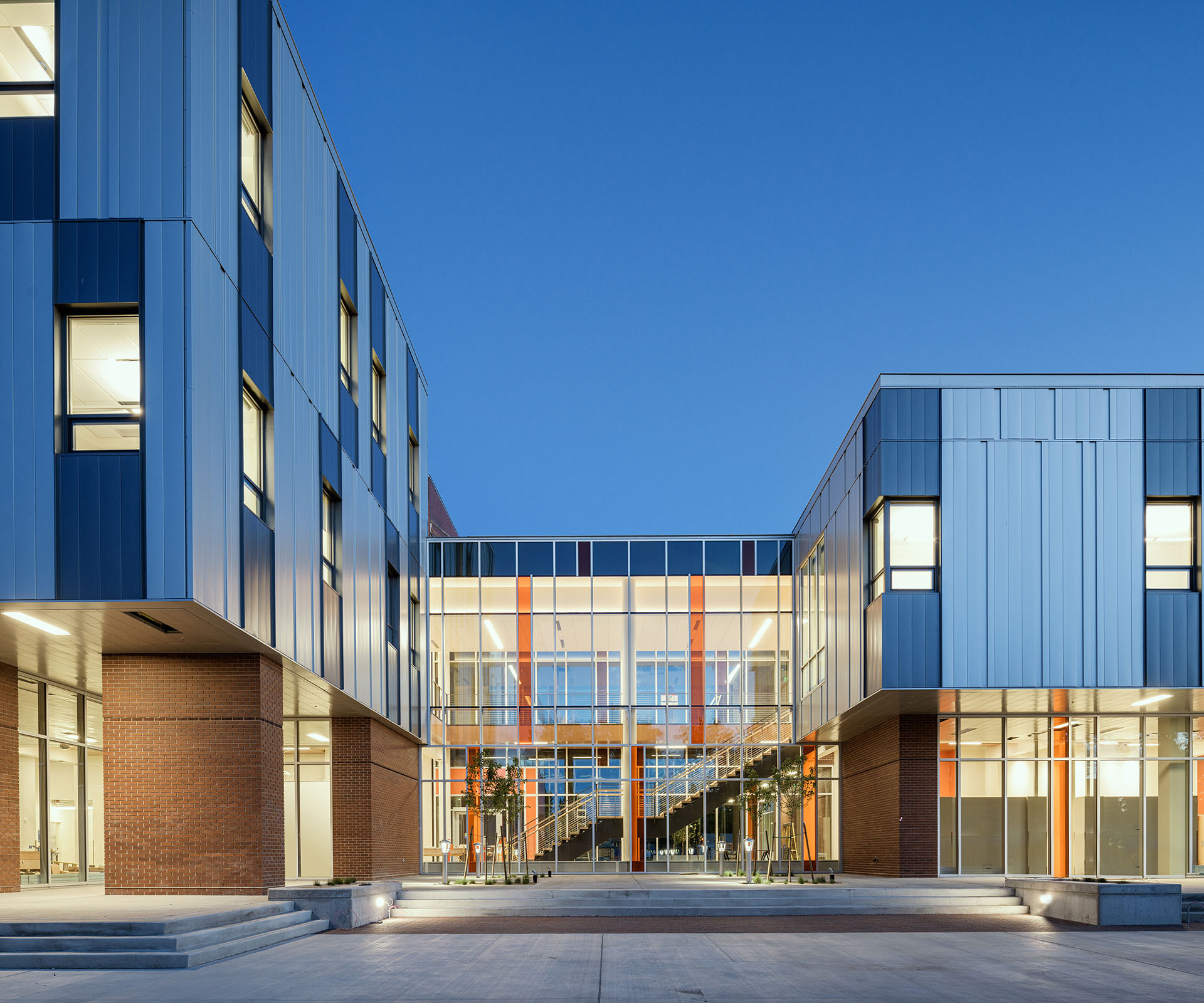
Boise State University Micron Center for Materials Research

Boise State University Micron Center for Materials Research

How do you take a nationally recognized material science department and turn it into a world class research institute?

This is the question that Boise State University found itself trying to answer.  The solution they came up with took a line right out of the movie, Field of Dreams:

“Build it and they will come.”

Boise State University set out to build a world-class research and educational facility for its Material Science Department that would attract the best and brightest researchers and students in the field.

How?

To attract top talent, there were 2 main goals for the new building:

  1. Create a world-class lab facility capable of supporting high-end research and hosting some of the most precise and sensitive equipment in the world (like high-powered electron microscopes).
  2. Create a beautiful, inviting, and functional space with faculty offices, a lecture hall, and classrooms.  To attract and retain the best and brightest, a space was needed that they would enjoy working in.

Who?

Hummel Architects partnered with Anderson Mason Dale Architects to lead the design and Hoffman to lead the construction.  Hoffman was brought on early in design as the construction manager, enabling collaboration between the construction and design teams as the design was being developed.

KPFF joined the team as the structural subconsultant to enable the architect and contractor to create this vision.

What?

World Class Lab

In order to allow the type of research done by the best and brightest in the field of material science, the new lab building needed to support some of the most precise and sensitive research equipment in the world.

This is no easy feat!  When looking through a microscope at something as small as an atom, even the slightest vibration in the building will blur the image.  Vibration was the biggest issue we needed to deal with for the lab portion of the design.

While we certainly had experience with vibration design in our Boise office, we had not done a vibration design to this level.  Fortunately, KPFF has many resources, and an industry leader on vibration in structures, Dr. Andy Taylor PhD, SE, FACI, is an Associate in KPFF’s Seattle office.  (Andy is so passionate about building vibration that his favorite hobby outside of work is to roam around Seattle with an accelerometer measuring the vibration of different buildings… or so the legend goes.)

One of my favorite things about working at KPFF is that everyone across the company is willing to help each other out.  This allows us to leverage the huge amount of technical expertise across our 1,200-person company to solve challenges that a company with a smaller bench would struggle with.

Dr. Joel Parks performed the vibration design for our Boise office and collaborated closely with Andy Taylor.

At the elevated floors in the lab building, the primary concern that drove vibrations was footfall.  We ended up using a 15” thick mildly reinforced 2-way concrete slab floor system to provide the mass and stiffness needed to bring vibration within the equipment tolerances.  That’s one thick hunk of concrete!  This was supported vertically by concrete columns and laterally by special concrete shear walls.

The most sensitive equipment, including a STEM unit that is one of only two in the country, is located at the ground level.  While we did provide a thick slab-on-grade below this unit that was isolated from the rest of the building slab, there is only so much you can do with concrete.  If the entire ground shakes due to a truck driving by, we would be out of luck.

To help solve the ground floor piece of the vibration puzzle we brought on Byron Davis, a vibration consultant from Vibrasure.  He performed a 24-hour vibration survey of the site and found that it is capable of meeting a VC-F (63µin/sec) rating, which is even better than the VC-E (125µin/sec) required by our most sensitive piece of equipment.  He also provided recommendations for a thick slab-on-grade cast in a way to prevent voids in the grade below.

The other piece of the puzzle for the lab building was how to support the myriad mechanical units required to service the facility.  To do this the roof was designed as a 14” thick 2-way concrete slab that supports a steel framed penthouse that contains the mechanical systems including air handling units, a chiller, many other large units and the associated pipe and duct distribution systems.

The lab isn’t all there is to the story, however.  The best and the brightest have a lot of choices for where they will do their research.  Our building needed to be a place that these folks WANT to spend time….

Inviting and Functional Faculty Offices and Classrooms

One of the ways Hummel and Anderson Mason Dale Architects achieved this was to keep the educational spaces and faculty suites separated, connecting them via a thin profile bridge walkway (See Figure 1). Arranging the building in this manner addresses the architectural goals but results in some interesting structural challenges around meeting design-level wind and seismic loads. If the educational space and the faculty suites do not move in unison – or in the worst case move in opposite directions – would the bridge be able handle the induced forces?  To understand the forces this would place on the bridge, KPFF ran multiple structural analysis models looking at different scenarios. We came up with a creative structural solution to achieve the thin profile and narrow width the architects imagined while still providing the structural strength necessary to keep the two parts of the building attached during an extreme event. The solution was to create a horizontal truss using the floor framing that spanned between the two areas. This allowed the steel members to be as shallow as possible, but gave the narrow walkway ample structural strength.

Figure 1. BSU Material Science
Classroom Block

The educational spaces consist of state-of-the-art teaching spaces, a 250-seat lecture hall, and two 80-seat classrooms. The two classrooms are located at ground level and are separated by a folding partition while the lecture hall is located above on the second floor. The lecture hall consists of elevated stadium seating and a tall open space free of columns to create a clear line of site to the front of the room. This large open space without columns necessitated a lecture hall roof that could span 85’-0” while supporting a 27,000-lb air handling unit. To accomplish this feat, we took advantage of a roof step to create an 11’-0” deep truss. By incorporating the truss into the already present roof step we were able to achieve the column-free lecture hall desired, while still being able to provide enough structure to support the adjacent air handler.

Conclusion

Throughout this project, the collaboration and sense of teamwork were amazing.  During the design phase we came to work with smiles on our faces nearly every day.  Not only was this project challenging and rewarding, it was a lot of fun. If you ever get the chance, stop by the Boise State University Micron Center for Materials Research and see the facility and its occupants in action.