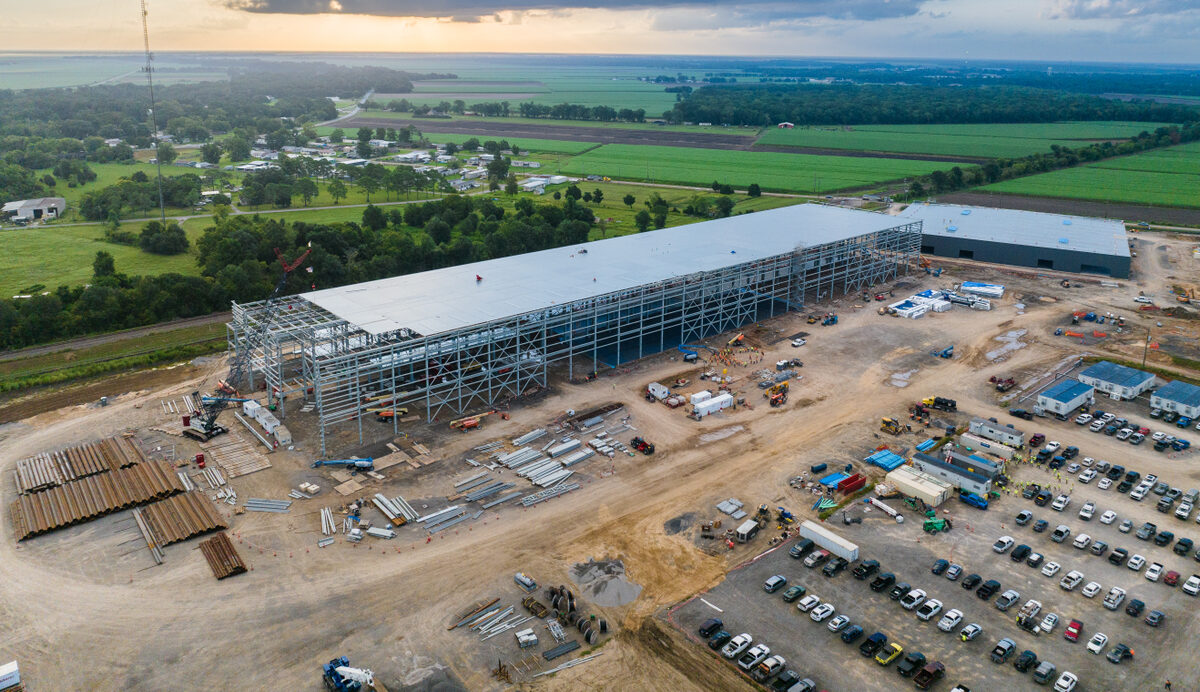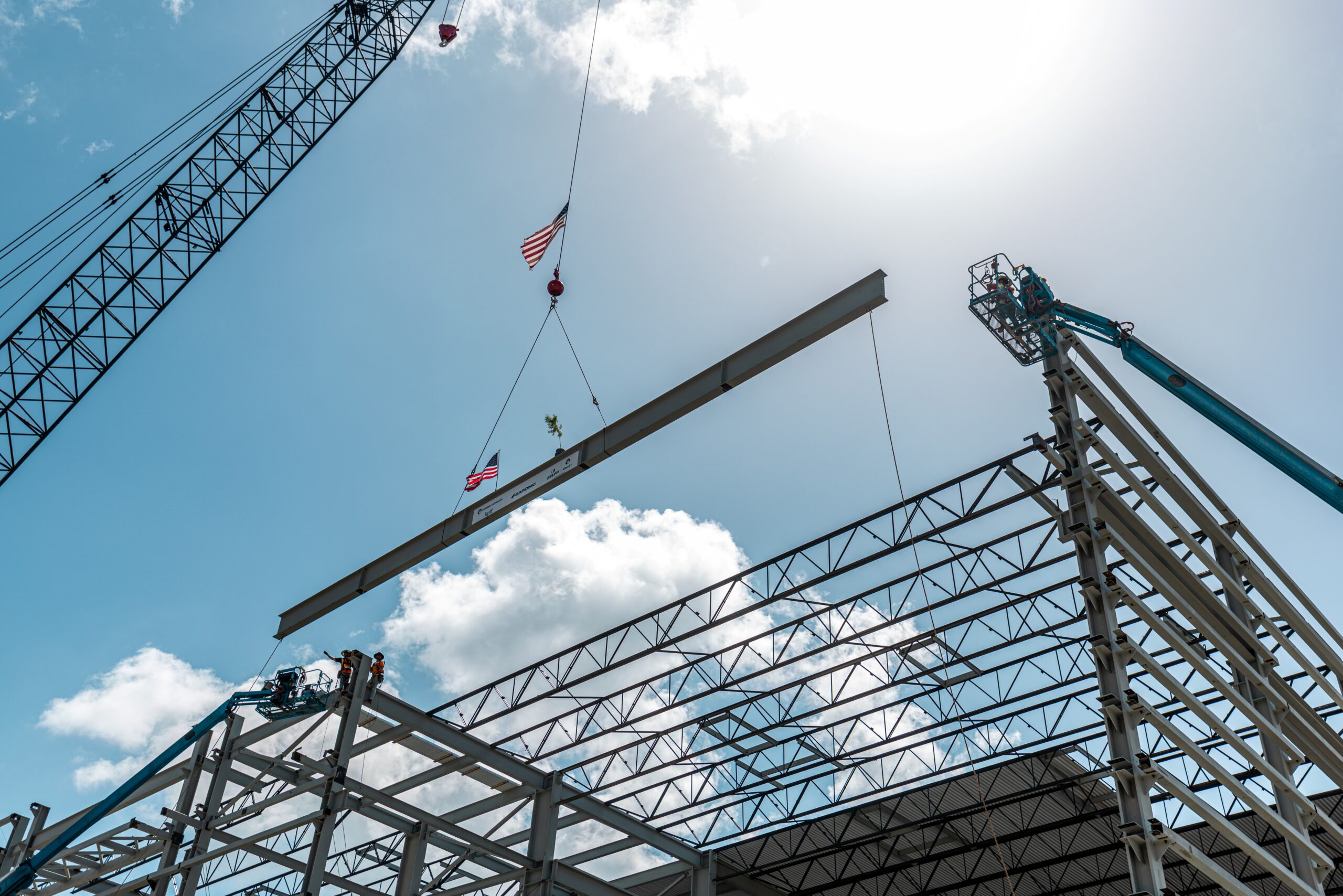
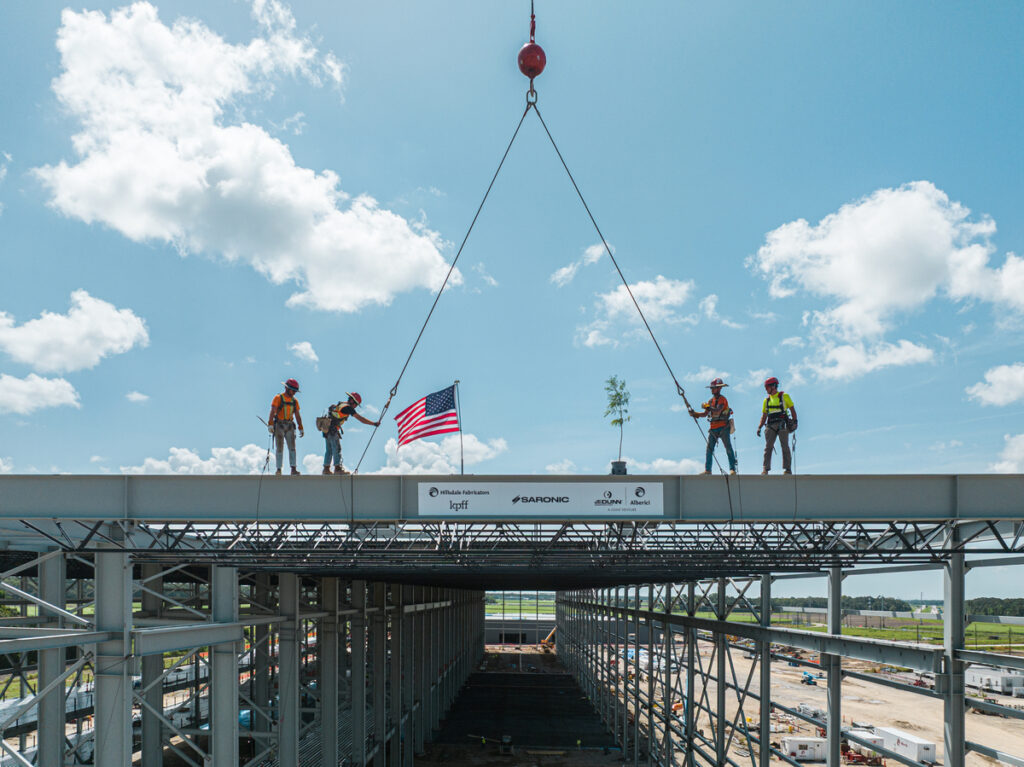
Less than a year after design began, the final structural beam was set in place at Saronic Technologies' shipyard expansion in Franklin, Louisiana.
For most industrial facilities, that timeline would be aggressive. For a first-of-its-kind facility building autonomous ships, it seems nearly impossible.
Yet in less than 12 months, the project team moved from concept through design, permitting, procurement, fabrication, and erection. Along the way, more than 125 KPFF professionals contributed across design management, structural engineering, civil engineering, and waterfront engineering.
While the project itself is unique, the lessons behind its success are increasingly relevant across advanced manufacturing, defense, and industrial markets. As emerging technologies reshape how products are designed and built, the facilities that support them must evolve just as quickly.
The question is not whether a facility can be designed and constructed. The question is whether it can be delivered fast enough to keep pace with innovation.
A Different Kind of Project
Saronic is helping shape the future of autonomous maritime technology. Their investment in Franklin represents more than a facility expansion. It is part of a broader effort to strengthen America's shipbuilding capabilities while supporting the next generation of maritime manufacturing.
Projects like this do not fit neatly into traditional delivery models. The facility had to support a rapidly evolving industry. The timeline was compressed. Decisions needed to be made quickly without sacrificing quality, safety, or long-term functionality. At the same time, construction activities, permitting, procurement, and design all needed to move forward in parallel. These kinds of challenges require more than technical expertise; they require a team that understands how design decisions affect the entire delivery process.
Looking Beyond Design
Traditionally, engineering teams focus on producing a complete design package and then handing it off to the next phase of the project. Projects with aggressive schedules demand a different mindset.
From the beginning, our team focused not only on what needed to be designed, but also on what needed to happen next. We looked beyond engineering deliverables to understand procurement timelines, fabrication constraints, permitting requirements, and construction sequencing. That perspective allowed the team to prioritize critical-path decisions and release information in phases so other team members could get to work before every detail was finalized.
In many cases, accelerating a project isn't about designing faster. It's about making the right decisions earlier. When engineering teams understand how their work influences the broader project schedule, they can help unlock opportunities that may otherwise be missed.
The Value of Integrated Expertise
One of the most rewarding aspects of this project was seeing multiple disciplines work together toward a common goal. KPFF served as the prime design consultant and project manager while providing structural, civil, and waterfront engineering services. Working alongside JE Dunn, Alberici, and the broader project team created a highly collaborative environment focused on solving problems rather than managing handoffs.
That integrated approach matters. Complex industrial and maritime facilities rarely align perfectly within a single discipline. Waterfront infrastructure affects civil design. Civil design influences building placement and operations. Structural systems impact fabrication schedules and construction sequencing. The more interconnected a project becomes, the more valuable it is to have teams that can collaborate across those boundaries.
For KPFF, the project represented a convergence of capabilities we have been building for decades. Our experience supporting industrial manufacturing facilities, delivering waterfront infrastructure, and managing large multidisciplinary projects allowed us to engage as a true partner throughout the process. It is also a reminder that some of the most innovative projects require bringing together experts who understand their disciplines deeply and empowering them to work as one integrated team.
Trust Accelerates Projects
Technical capability was important on this project, but trust was equally important. Saronic brought an ambitious vision and moved quickly. They challenged conventional thinking and pushed everyone involved to find better solutions. In return, they entrusted their project partners to help transform that vision into reality.
The result was a collaborative environment where owners, engineers, architects, contractors, and specialty consultants worked side by side toward a shared objective.
When trust exists between project partners, decisions happen faster. Problems are addressed earlier. Teams become more willing to challenge assumptions, explore alternatives, and focus on what is best for the project.
The most successful projects are rarely the result of a single organization. They emerge from groups of talented people aligned around a common purpose.
Engineering for Speed
One of the most important lessons from this project is that schedule performance begins long before construction starts. It begins with design.
For projects operating on accelerated schedules, engineers must think beyond traditional metrics like first cost or material quantities. Design decisions should also consider fabrication efficiency, constructability, procurement lead times, and installation speed.
That often means simplifying systems, reducing unnecessary complexity, and creating opportunities for repeatability wherever possible.
Building What's Next
Across the United States, investment is accelerating in advanced manufacturing, technology, and industrial production. These industries are developing new products, adopting new technologies, and operating on timelines that would have seemed unrealistic just a few years ago.
The facilities that support them must keep pace.
For engineers, that creates an exciting opportunity. It challenges us to think differently about project delivery, collaboration, and the role design plays in achieving broader business objectives.
For KPFF, the topping out of the Saronic shipyard expansion represents more than a project milestone. It showcases what is possible when multidisciplinary expertise, owner trust, and a shared commitment to execution come together behind a bold vision. Most importantly, it demonstrates something that continues to drive our work every day: the opportunity to help shape the infrastructure, facilities, and industries that define the future.
Not every project gets to support a first-of-its-kind shipyard for autonomous maritime vessels. But every project benefits from the same principles that made this one successful: collaboration, technical excellence, and a relentless focus on helping clients achieve ambitious goals. And those are the kinds of challenges that define KPFF.